SMS bibliographyBibliography related to the study of sms language and sms use. Please help us maintain this bibliography up to date by giving us your papers' references.
2010
· Richard Beaufort, Sophie Roekhaut, Louise-Amélie Cougnon, Cédrick Fairon (2010). A hybrid rule/model-based finite-state framework for normalizing SMS messages. Accepted at ACL 2010 (forthcoming). · Richard Beaufort, Sophie Roekhaut, Louise-Amélie Cougnon, Cédrick Fairon (2010). Une approche hybride traduction/correction pour la normalisation des SMS. Accepted at TALN 2010 (forthcoming). · Louise-Amélie Cougnon and Richard Beaufort (2010). SSLD: a French SMS to Standard Language Dictionary. In S. Granger & M. Paquot (Eds.) eLexicography in the 21st century: New applications, new challenges. Proceedings of eLEX2009. Cahiers du Cental 7. Louvain-la-Neuve: Presses universitaires de Louvain. To appear. · L. A. Shafie, N. A. Darus and N. Osman (2010). "SMS Language and College Writing: The languages of the College Texters", In International Journal of Emerging Technologies in Learning, pp. 26-31.
2009
· Markus Bieswanger (2009, sous presse)"Gendered Language Use in Computer-Mediated Communication: typography in Text Messaging". In Bieswanger, Markus, Heiko Motschenbacher & Susanne Mühleisen (Eds.), Language in its Socio-Cultural Context: New Explorations in Global and Gendered Uses. Frankfurt at al.: Lang. · Louise-Amélie Cougnon and Gudrun Ledegen (2009, sous presse). « Une étude comparatiste des variétés du français dans l’écrit SMS (Réunion-Belgique) ». In Les voix des Français : usages et représentations. Colloque AFLS à Oxford en avril 2008. Cambridge Scholars Publishing. · Fabien Liénard (2009). « L’avenir du SMS en marketing mobile » dans Actes du Colloque International New Media : New Technologies for a new world – University of Barhain – 7-9 april, 2009 – UoB Press – Bahreïn, pp. 261-282. · Fabien Liénard (2009). « Ecriture électronique, SMS et publicité » dans La publicité d’aujourd’hui – Discours, formes et pratiques – Minot F. et Lebtahi Y. (dir.), CIRCAV n°20, L’Harmattan, Université Lille 3, pp. 257-272. · Rachel Panckhurst (2009). « Texting in three European languages: does the linguistic typology differ? », Colloque imean, University of West England, Bristol, April 23-25.
2008 · Dorothee Arlt (2008). Nicht-Erreichbarkeit in der Mobilkommunikation - eine medienpsychologische Experimentalstudie zur SMS-Kommunikation. Ilmenau. · Naomi S. Baron (2008). Always On: Language in an Online and Mobile World. Oxford University Press. · Richard Beaufort, Sophie Roekhaut and Cédrick Fairon (2008). « Définition d'un système d'alignement SMS/français standard à l'aide d'un filtre de composition ». In Proceedings of JADT 2008, pp. 155-166. pdf · David Crystal (2008). Txtng: The gr8 db8. Oxford, Oxford University Press. · Ana Deumert and Oscar Masinyana Sibabalwe (2008). « Mobile language choices -The use of English and isiXhosa in text messages (SMS) : Evidence from a bilingual South African samples ». In English world-wide, vol. 29 , no 2 , pp. 114 – 147. · Carmen Frehner (2008). Email – SMS – MMS. The Linguistic Creativity of Asynchronous Discourse in the New Media Age. Bern: Peter Lang. · Susan C. Herring and Asta Zelenkauskaite · Catherine Kobus, François Yvon and Géraldine Damnati (2008). « Normalizing SMS: are two metaphors better than one ? ». In Proceedings of the 22nd International Conference on Computational Linguistics (COLING 2008), Pages 441-448,Manchester, UK. · Catherine Kobus, François Yvon and Géraldine Damnati (2008). « Transcrire les SMS comme on reconnaît la parole ». In Actes de la Conférence sur le traitement Automatique des Langues (TALN'08), Pages 128-138, Avignon, France. · Foued Laroussi and Fabien Liénard (2008). « Eléments d’analyse de la communication médiée par téléphone mobile (CMT) de scripteurs plurilingues franco-arabes ». In Actes du Colloque international Interagir et transmettre, informer et communiquer : quelles valeurs, quelle valorisation ?, Tunis, Tunisie, pp. 450-460. · Elena Pistolesi (2008). « I "messaggini": sintesi, ridondanza e contesto" ». In Lingua Italiana d’Oggi (LId'O), vol. V, pp. 297- 316. · Rachel Panckhurst (2008). « Short Message Service (SMS) : typologie et problématiques futures », in Arnavielle T. (coord.), Polyphonies, pour Michelle Lanvin, Montpellier, Éditions LU. 2007 · Jacques Anis (2007). « Neography – Unconventional Spelling in French SMS Text Messages ». In Brenda Danet and Susan C. Herring (Hrsg.). The Multilingual Internet – Language, Culture and Communication Online. · Francois Barthélemy (2007). « Cunéiforme et SMS: analyse graphémique de systèmes d'écriture hétérogènes ». Acte du 26e Colloque international Lexique Grammaire, Bonifacio, France, 2-6 octobre 2007. · Silvia Betti (2007). « La jerga juvenil de los SMS :-) ». In Cibersociedad, Archivo OCS. Link · Markus Bieswanger (2007). « 2 abbrevi8 or not 2 abbrevi8: A contrastive analysis of different space and time-saving strategies in English and German text messages ». In Simeon Floyd and al. (eds.), Texas Linguistic Forum, Volume 50, Austin, Texas Linguistic Forum. Link · Céline Bouillaud, Lucile Chanquoy and Jean-Émile Gombert (2007). «Cyberlangage et orthographe : quels effets sur le niveau orthographique des élèves de CM2, 5e et 3e ? ». In Bulletin de psychologie, Tome 60 (6), N°492, pp. 553-565. · Jeff Brown, Bill Shipman, and Ron VETTER (2007). « SMS : The Short Message Service ». In Computer, vol. 40 , no 12 , pp. 106 – 110. Link · Manuel Castells and al (Hrsg., 2007). Mobile Communication and Society: A Global Perspective (Information Revolution and Global Politics). Cambridge. · Monojit Choudhury et al. (2007). « Investigation and modeling of the structure of texting language ». In International journal on document analysis and recognition, vol. 10 , no 3-4 , pp. 157 – 174. · Jacques DaviD and Harmony Gonsalves (2007). « L’écriture électronique, une menace pour la maîtrise de la langue ? », Le français aujourd’hui, n° 156. · Jürgen Dittmann, Hedy Siebert and Yvonne Staiger-Anlauf (2007). Medium & Kommunikationsform am Beispiel der SMS [Online-Version]. Networx 50. Link · Jorge Documet et al. (2007). « Managing healthcare information using short message service (SMS) in wireless broadband networks ». In Progress in biomedical optics and imaging, vol. 8 , n° 35. · Emilie Guimier De Neef and Sébastien Fessard (2007). « Evaluation d'un système de transcription de SMS ». Acte du 26e Colloque international Lexique Grammaire, Bonifacio, France, 2-6 octobre 2007. · Fabien Liénard (2007). « Analyse linguistique et sociopragmatique de l’écriture électronique – Le cas du SMS tchaté ». In La langue du cyberespace : de la diversité aux normes – Gerbault J. (éd), L’Harmattan, pp. 265-278. · Corinne Martin (2007). « Téléphone portable et relation amoureuse : les SMS, des messages vraiment désincarnés ? », Corps, 3, pp. 105-110. · Nicolas Michot (2007). « Les usages lexicaux des jeunes sur les supports modernes de communication ». Acte du 26e Colloque international Lexique Grammaire, Bonifacio, France, 2-6 octobre 2007. · Lilia Mironovschi (2007). « Russian SMS compliments ». In Written language and literacy, vol. 10 , no 1 , pp. 53 – 63. · Emmanuel Prochasson, Christian Viard-Gaudin, Emmanuel Morin (2007). « Language Models for Handwritten Short Message Services ». Proceedings of the 9th International Conference on Document Analysis and Recognition (ICDAR'07), Curitiba, Brésil, septembre 2007. pdf · Emmanuel Prochasson, Emmanuel Morin, Christian Viard-Gaudin (2007). « Vers la reconnaissance de mini-messages manuscrits. In Actes du 26e Colloque International sur le Lexique et la Grammaire (LG'07), Bonifacio, France. pdf · Anna Spagnolli and Luciano Gamberini (2007). « Interacting via SMS : Practices of social closeness and reciprocation ». In British journal of social psychology, vol. 46 , pp. 343 – 364. · Flavia Ursini (2007). « Appunti di deissi. Interlocutori, spazio e tempo nelle scritture elettroniche ». In Miscellanea di studi linguistici offerti a Laura Vanelli da amici e allievi padovani, a cura di Roberta Maschi, Nicoletta Penello, Piera Rizzolatti, Udine, Forum, pp. 343-351. · Vesa Virtanen, Timo Sirkia and Virve Jokiranta (2007). « Reducing nonresponse by SMS reminders in mail surveys ». In Social science computer review, vol. 25 , no 3 , pp. 384 – 395. · Kristin Vold Lexander (2007). « Langues et SMS au Sénégal – le cas des étudiants de Dakar ». In Jeannine Gerbault (éd.)(2007). La langue du cyberespace : de la diversité aux normes, L’Harmattan, Paris, p. 59-66. 2006 · Daniel Ahvazi (2006). Text Messaging and its Effects on Everyday Life. Londres. Link · Silvia Betti (2006). « La jerga juvenil de los SMS :-) ». In Cuadernos del Lazarillo, n.31, Salamanca, Spagna, pp. 68-76. · Bettina Braun (2006). « Jugendliche Identitäten in SMS-Texten ». In Christa Dürscheid and Jürgen Spitzmüller. Zwischentöne. Die Sprache der Jugend in der Deutschschweiz. Zürich: Verlag Neue Zürcher Zeitung, pp. 101-114. · Jurga Daugmaudytë and Dovilë Këdikaitë (2006). « Le langage SMS dans le français ». In Kalbotyra, 56(3), pp. 39-47. Link · Aurélia Dejond (2006). Cyberlangue. Racine, Bruxelles. · Cédrick Fairon, Jean Klein and Sébastien Paumier (2006). SMS pour la science. Corpus de 30.000 SMS et logiciel de consultation. Presses universitaires de Louvain, Louvain-la-Neuve. · Cédrick Fairon, Jean Klein and Sébastien Paumier (2006). « Le langage sms : révélateur d’1compétence ». In Le français m’a tuer, 1, pp. 33–42. pdf · Cédrick Fairon and Sébastien Paumier (2006). « A translated corpus of 30,000 french sms ». In Proceedings of LREC 2006,Genova. pdf · B. Herpoel (2006). Le sms : Outil de communication d’entreprise. Utopie ou réalité ? Master’s thesis, HELHO, Tournai. · Zdenka Hladká (2006). « Pravopis v soucasné korespondenci mladých lidí: Na materiálu tradicních dopisu, e-mailu a SMS ». [Transl. « Orthographe de la correspondance contemporaine des jeunes : sur la base de lettres, e-mails et SMS» traditionnels]. In Nase Rec (NRec), 89 (2), pp. 73-88. · Meribout Kaddour (2006). « Il linguaggio degli SMS : nuova forma di comunicazione e di espressione giovanile ». In El-Tawassol, no 16, pp. 93 – 100. · Catherine Lejealle (2006) « GPT lé plom », in Le Nouvel Observateur, Hors série n°63, pp. 38-40. · Tom Van Riper (2006). « Text-message generation entering workplace. New technologies mean adjustments for co-workers of all ages ». In Forbes, 30 août 2006. · Jean Véronis and Emilie Guimier de Neef (2006). « Le traitement des nouvelles formes de communication écrite ». In G. Sabah (éd.). Compréhension automatique des langues et interaction. Hermès Science, Paris. Link 2005 · Pauline Beck (2005). La génération sms. le sms chez les jeunes : quel usage et quel imaginaire de communication ? Master’s thesis, Université Catholique de Louvain, Louvain-la-Neuve. · Gaetano Berruto (2005). « Il parlar spedito. L'italiano di chat, e-mail e SMS ». In Rivista Italiana di Dialettologia, 29, pp. 295-296. · Rémi Bove (2005). « Etude de quelques problèmes de phonétisation dans un système de synthèse de la parole à partir de sms ». In Actes de RECITAL 2005, Dourdan. Link · André Caron and Letizi Caronia (2005). Culture mobile : les nouvelles pratiques de communication. Presses universitaires de Montréal, Montréal. · Victoria Carrington (2005). « Txting : The end of civilization (again) ». In · Dominique Desjeux (2005). « Usages et enjeux du sms en Chine, en France et en Pologne ». In Consommation & Sociétés. Link · Burkhard Dretzke and Margaret Nester (2005). « Wie ubersetzt man aka, asap, ono, ski, f2f, thx und woopie ins Deutsche? ». [Transl. « How Does One Translate aka, sap, ono, ski, f2f, thx, and woopie into German? »] In PRAXIS Fremdsprachenunterricht, 2, pp. 51-52. · Y.B. Kemp (2005). « Text messaging or messaging the text : Literature and the construction of identity ». In CLA Journal, 48(3) : 245–252. · R. Harper, L. Palen and A. Taylor (eds.) (2005). The inside text: Social, cultural and design perspectives on SMS. Springer. · Zdeňka Hladká et al. (2005). Čeština v současné soukromé korespondenci. Dopisy,e-maily, SMS. [Transl. Czech in Contemporary Private Correspondence: Letters, E-Mails, and SMS]. Brno, Masarykova univerzita. · Fabien Liénard (2005). « Langage texto et langage contrôlé, description et problèmes ». In Linguisticae Investigationes, 28(1), pp. 49–60. · Min Lin and Andrew Sears (2005). « Chinese Character Entry for Mobile Phones: A Longitudinal Investigation ». In Interacting with Computers, 17, 2, Mar, pp. 121-146. Link · Andrea Nowotny (2005). Daumenbotschaften. Die Bedeutung von Handy und SMS für Jugendliche [Online-Version]. Networx 43. Link · Claus J. Tully and Claudia Zerle (2005). « Handys und jugendliche Alltagswelt ». In merz. medien + erziehung. 3(05), pp.11-16. · Flavia Ursini (2005a). « La lingua dei giovani e i nuovi media: gli SMS ». In F. Fusco/C. Marcato (a cura di), Forme di comunicazione giovanile, Roma, Il Calamo, pp. 323-336. · Flavia Ursini (2005b). « Tra scritto e parlato: i ‘messaggi brevi’ tra telefoni cellulari ». In Burr Elisabeth (a cura di), Tradizione & Innovazione. La linguistica e filologia italiana alle soglie di un nuovo millennio. Atti del VI Convegno Internazionale SILFI (Duisburg 23.6 - 2.07 2000), Firenze, Franco Cesati, pp. 443-455. · Agnes Veszelszki (2005). « Írásjelek és szimbólumok az SMS-ekben » [Transl. « Les signes de ponctuation et les symboles dans les SMS »]. In Magyar Nyelvor, Jan-Mar, 129 (1), pp. 111-116. · How Yijue and 2004 · Anne Sophie Boisard (2004). Les usages des SMS en Chine. PhD thesis,Université Paris 5, Sorbonne. · Gérard Gaglio (2004). « La pratique du sms : analyse d’un comportement de communication en tant que phénomène social ». In Consommations et sociétés, 4. Link · Emilie Guimier de Neef and Jean Véronis (2004). « 1 pw1 sr la kestion ;-)». Paper presented at the Journée d'Etude de l'ATALA, Le traitement automatique des nouvelles formes de communication écrite (e-mails, forums, chats, SMS, etc.), Paris. · Louise Horstmanshof and Mary R. Power (2004). « Yyssw (Yeah, Yeah, Sure, Sure, Whatever): Keeping and Supporting Relationships Through SMS Text Messaging ». Manuscript submitted for publication. · Elena Pistolesi (2004). Il parlar spedito : l'italiano di chat, e-mail e SMS. Padova, Esedra. · Mary Power and Des Power (2004). « Everyone here speaks txt : Deaf people using sms in · Donna Reid and Fraser Reid (2004). « Insights into the Social and Psychological Effects of SMS Text Messaging ». In · Kathleen Reidy (2004). « Successful messaging services ». In EContent, 27(9) : 30–34. · Marc Sourdot (2004). « La dynamique du francais actuel ». In Neuphilologische Mitteilungen, 105, 1, pp. 85-94. · Samuel Spycher (2004): « "I schibdr de no…" Schweizerdeutsche Umgangsformen in der SMS-Kommunikation ». In Networx 36. Link · Cosetta Venturi (2004). « Aspetti sociolinguistici di un corpus di sms : l’interazione tra ascoltatori e radio ». In Rivista Italiana di Dialettologia, 28, pp. 87–138. · How Yijue (2004). Analysis of sms efficiency. Master’s thesis, National University of Singapore. Link 2003 · Carla Bazzanella (2003). « Nuove forme di comunicazione a distanza, restrizioni contestuali e segnali discorsivi », in N. Maraschio/T. Poggi Salani (a cura di), Italia linguistica anno mille. Italia linguistica anno duemila. Atti del XXXIV Congresso Internazionale di Studi della SLI (Firenze, 19-21 ottobre 2000), Roma, Bulzoni: 403-415. · Silvia Betti (2003). « ‘he escrito te quiero en la pequeña pantalla’ (del móvil) ». In Cuadernos Cervantes de la Lengua Espanola, 9(44) : 70–75. Link · Françoise Gadet (2003). « Derrière les problèmes méthodologiques du recueil de données ». In Texto !, juin-septembre 2003. Link · Catherine Lejealle (2003). Téléphone portable, SMS et emails : de nouveaux outils au service de la relation amoureuse naissante. TFE, DEA. Université Paris 5, Sorbonne. · Corinne Martin (2003). « Représentations des usages du téléphone portable chez les jeunes adolescents ». In Supports, dispositifs et discours médiatiques à l’heure de l’internationalisation, 10e colloque bilatéral franco-roumain, Bucarest, 28 juin-2juillet 2003. Link · Corinne Martin (2003). « Téléphone portable chez les jeunes adolescents et leurs parents : quelle légitimation des usages ? ». In Actes du Workshop de Marsouin. Ecole Nationale supérieure des télécommunications de Brest, 4-5 décembre 2003. Link · Rema Nagarajan (2003). « SMS gives hearing impaired a lifeline ». In Deaf Today, January 19 2003. Link · Daniel Süss et al. (2003). « Jugendliche und Medien. Merkmale des Medienalltags, unter besonderer Berücksichtigung der Mobilkommunikation ». [Online-Version]. Link · Milena Zic Fuchs (2003). « Communication Technologies and Their Influence on Language: An Example from Croatian ». In Studia Romanica et Anglica Zagrabiensia, 47-48, pp. 597-608.
2002 · Jannis Androutsopoulos and Gurly Schmidt (2002). « SMS-Kommunikation : Ethnografische Gattungsanalyse am Beispiel einer Kleingruppe ». In: Zeitschrift für Angewandte Linguistik 36, pp. 49-80. Link · Jacques Anis (2002). « Communication électronique scripturale et formes langagières : chats et sms ». In Actes des Quatrièmes Rencontres Réseaux Humains / Réseaux technologiques, Université de Poitiers, Poitiers. Link · Deborah Circelli (2002). « An easier way to communicate: Text messaging with cellphones and pagers has become a boon ». In Palm Beach Post, December 1 2002. · Giovanna · Aurélia Dejond (2002). La cyberl@ngue française. La Renaissance du Livre, Tournai. · Nicola Doring (2002). « Kurzm. Wird gesendet : Abkurzungen und Akronyme in der SMS-Kommunikation ». [Transl. « SM Will Be Sent, Abbreviations and Acronyms in the "Short Message Service" [SMS]Communication »]. In Muttersprache, 112, 2, July, pp. 97-114. · Christa Dürscheid (2002a). « SMS-Schreiben als Gegenstand der Sprachreflexion ». In Networx 28. Link · Christa Dürscheid (2002b). « E-Mail und SMS – ein Vergleich ». In Arne Ziegler and Christa Dürscheid (Hrsg.). Kommunikationsform E-Mail. Tübingen: Stauffenburg, 93-114. · Jennifer 8. Lee (2002). « I think therefore IM». In The New York Times. 19 septembre 2002, · Christian Licoppe (2002). « Sociabilité et technologie de la communication. Deux modalités d’entretien des liens personnels dans le contexte du déploiement des dispositifs de communication mobiles ». In Réseaux, 112-113 : 172–210. Link · Michel Marcoccia (2002). « Le texto comme ils l’écrivent ». In Les Cahiers de l’IFOREP, 105 : 78–79. · Enid Mantje-Meijer and Doris Pires (2002). « SMS Use by young people in the · Federico Montanari and Nicola Dusi (2002). « Interfacce sociosemiotiche e pratiche inter-oggettuali. Qualche esempio dal mondo dei telefoni cellulari », VS 91/92 (2002), pp. 181-201. · Carole Anne Rivière (2002). « La pratique du mini-message. Une double stratégie d’extériorisation et de retrait de l’intimité dans les interactions quotidiennes ». In Réseaux, 112-113 : 139–168. Link · Mildred A. Rojo-Laurilla (2002). « "He Texts, She Texts": Gendered Conversational Styles in Philippine Text Messaging ». In Philippine Journal of Linguistics, 33, 1, June, pp. 71-86. · Crispin Thurlow (2002). « Generation text? Exposing the sociolinguistics of young people's text-messaging ». In Discourse Analysis Online. March 12 2004. Link · Katia Vilarasau (2002). « Le retour de l’écrit ». In Valeur mutualiste, 216 : 16, février 2002. Link 2001 · Ramón Almela Pérez (2001). « Los sms : Mensajes cortos en la telefonía móvil ». In Espanol Actual : Revista de Español vivo, 75 : 91–99. · Jacques Anis (2001). Parlez-vous texto ? Guide des nouveaux langages de réseau. Le cherche midi, · John Cradden (2001). « Text messaging revolution for the hard of hearing ». In Irish Times, July 21 2001, p.8. · Leopoldina Fortunati (2001). « The mobile phone between orality and writing ». In Actes ICUST (International Conference on Uses and Services in Telecommunications), · Carmen Galan Rodríguez (2001). « Sms ? un nuevo modelo de lenguaje ? ». In Espanol Actual, 76 : 93–103. · R.E. Grinter and M.A. Eldridge (2001). « ‘y do tngrs luv 2 txt msg?’ ». In · Eija-Liisa Kasesniemi and Pirjo Rautiainen (2001). « Life in 160 Characters: The Text Messaging Culture of Finnish Teenagers ». In Mark Aakhus and James Katz (2001). Perpetual Contact: · Daniela Pietrini (2001). « "x’6 :-( ?" : Gli sms e il trionfo dell’informalita e della scrittura ludica ». In Italienisch, 46 : 92–101. · D. Rubin (2001). « Phones keep deaf people in touch with text: Cellular feature serves as a lifeline in · Peter Schlobinski et al. (2001). « Simsen. Eine Pilotstudie zu sprachlichen und kommunikativen Aspekten in der SMS-Kommunikation ». In Networx 22. Link · Flavia Ursini (2001). « Multimodalità nella scrittura? Gli SMS tra telefoni cellulari ». In E. Magno Caldognetto/P. Cosi (a cura di), Multimodalità e multimedialità nella comunicazione. Atti delle XI giornate di Studio del Gruppo di Fonetica sperimentale (A.I.A.), Padova, Unipress, 2001, pp. 75-80. · Ulysse Veyrin-Forrer (2001). Dictionnaire insolite français-SMS. Éditions Cosmopole, Paris. 2000 · · Jacques Anis and Nicole Marty (2000). Nouvelles Technologies et Lecture-Ecriture. CNDP, Paris. · Michele Cortelazzo (2000). « 6 proprio 3mendo : dalla lettera ai messaggini in codice. Oralita, concisione, assenza di sintassi : Le caratteristiche di una scrittura ’allegra’ ». In Corriere della Sera, 19 août 2000 : 29. Link · · Michel Marcoccia (2000). « Les smileys : une représentation iconique des émotions dans la communication médiatisée par ordinateur ». In Les émotions dans les interactions communicatives, ARCI. PUL. Lyon, pp. 249-263. 1999 · James Raymond Davis (1991). « Let your fingers do the spelling: Implicit Disambiguation of words spelled with the telephone keypad ». In Journal of the American Voice I/O Society, 9, pp. 57-66. Link · Ángeles Líbano Zumalacárregui (1999). « Prensa y nuevas tecnologías como medios de difusión del léxico juvenil ». Centro Virtual Cervantes, 1999-2000. Link |
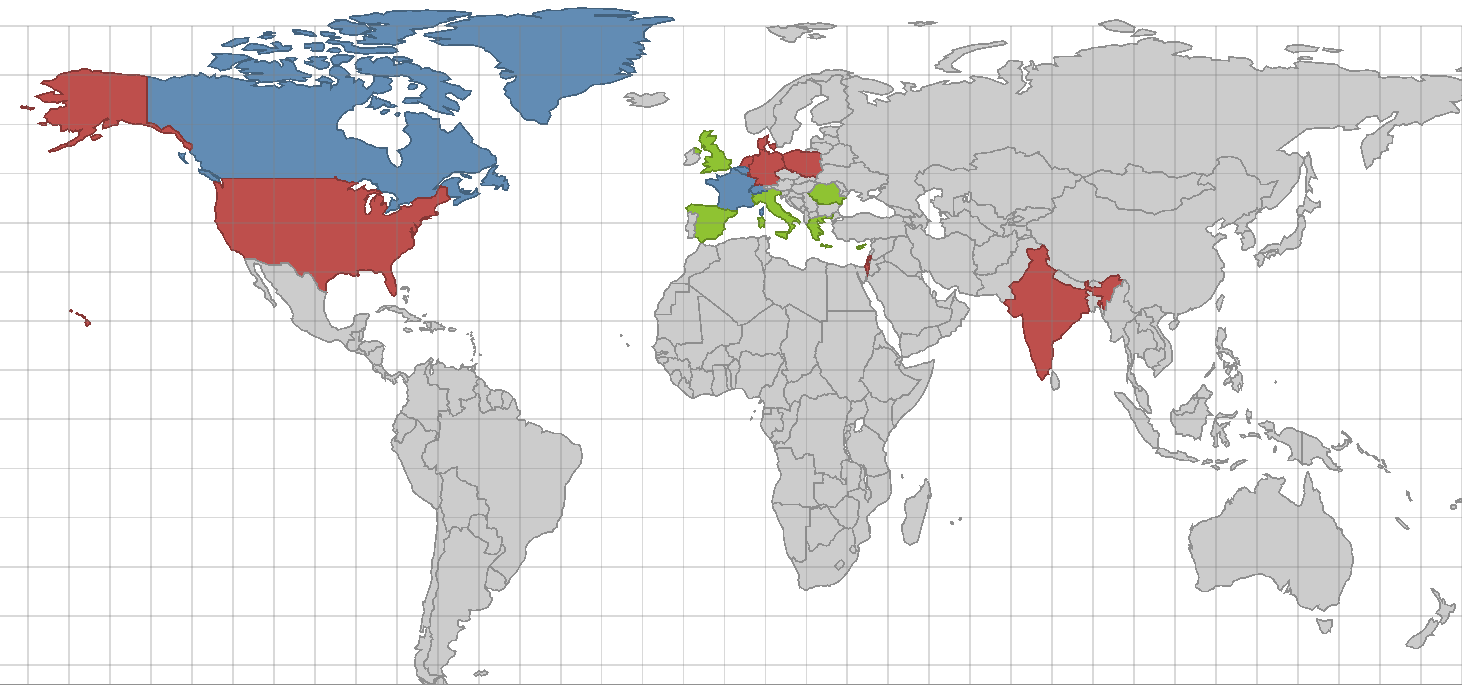
Greece published its own
La Réunion just finished a